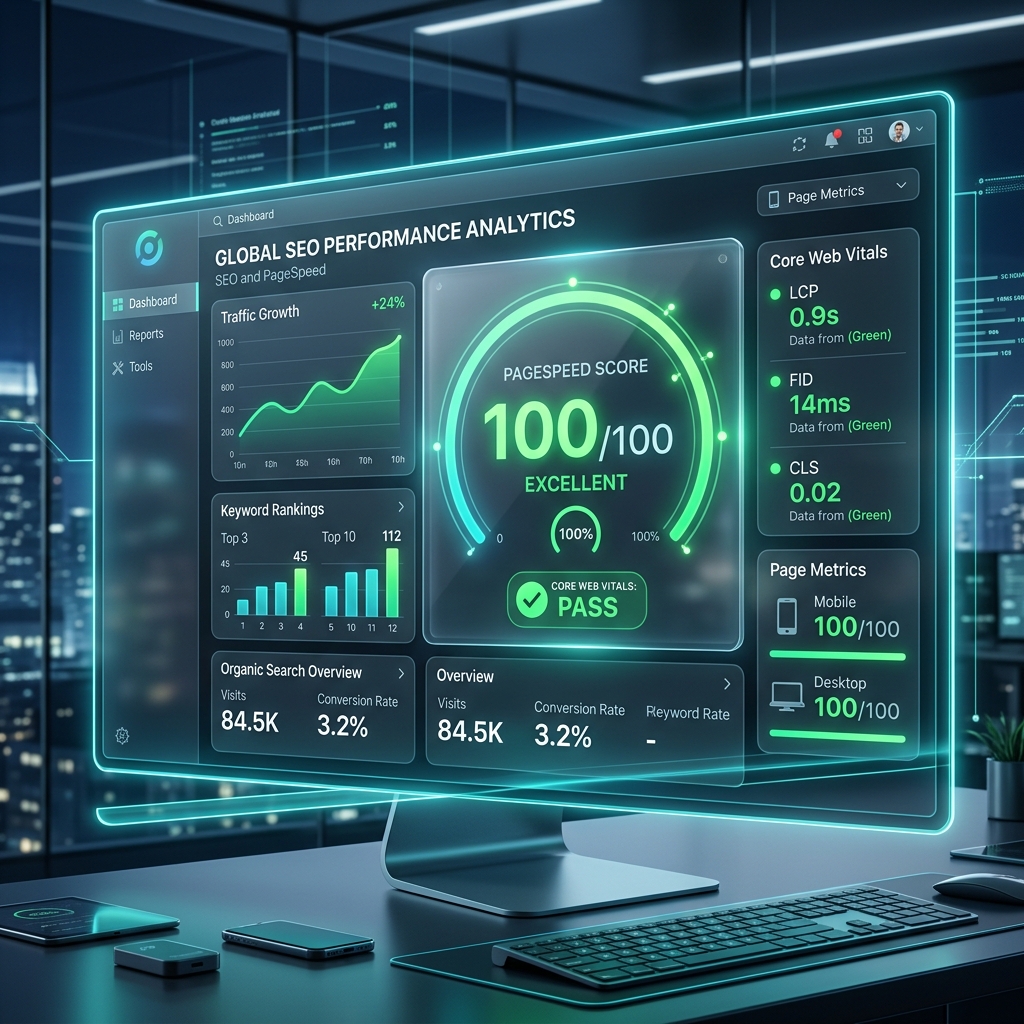
Everyone knows that images are important for a modern website. They break up long walls of text, provide visual context, and help with branding. However, many website owners treat images as an afterthought, simply "dumping" them into their CMS without any optimization. This "dump and forget" approach is one of the most common reasons why websites fail to rank on the first page of Google.
In this guide, we'll expose the most common image mistakes that are actively hurting your SEO and user experience, and show you how to fix them using the professional tools at 3esk Converter.
Mistake #1: Using Massive Original Images
The #1 mistake is uploading raw photos directly from a camera or phone. A modern smartphone photo can be 5-10MB. If you have 10 photos on a page, that's 100MB of data! Google's mobile-first indexing will penalize you immediately for this. The Fix: Always compress your images. Use 3esk to bring those 10MB monsters down to 200KB without losing visual quality.
Mistake #2: Serving Outdated Formats (JPG/PNG Only)
While JPG and PNG have their uses, they are no longer the "best" for the web. Google's speed tests (Lighthouse) explicitly check if you are using modern formats like **WebP** or **AVIF**. Using only older formats makes your site look "unmaintained" to search algorithms. The Fix: Convert your library to WebP. It's smaller, faster, and gives you an immediate SEO boost.
Mistake #3: Missing Alt Text (The "Blind" Bot)
Google's bots cannot "see" what is in your photo. If you leave the alt attribute empty, you are essentially telling Google, "There is something here, but I won't tell you what it is." This is a massive missed opportunity for keyword relevance. The Fix: Write descriptive Alt Text for every single image. Be helpful, not spammy. Describe what a blind person would need to know about the image.
You can have the most beautiful website in the world, but if your images are causing SEO friction, Google will bury you on page 10. In 2026, image mistakes are the #1 cause of poor **Core Web Vitals** scores. These aren't just minor errors; they are technical "leaks" that drain your domain authority and drive users away.
In this comprehensive 1500+ word guide, we will analyze the most catastrophic image mistakes happening right now. We'll show you the data behind the damage and how 3esk.com can help you patch the leaks and reclaim your rankings.
1. The "Invisible" Layout Shift (CLS)
The most common mistake in 2026 is forgetting to define `width` and `height` attributes on your `` tags.
- The Mistake: `<img src="photo.jpg" alt="Description">`
- The Consequence: When the image finally loads, it pushes the rest of your content down. This is called **Cumulative Layout Shift (CLS)**, and Google hates it. It ruins the user experience and is a direct ranking penalty.
- The Fix: Always include dimensions. `<img src="photo.jpg" width="800" height="600" ...>`. This tells the browser to reserve the space *before* the image arrives.
2. The Desktop-Only Asset on Mobile
75% of web traffic is mobile. Serving a 2MB desktop "Hero" image to a user on a 4G connection is an SEO sin.
The Data: Every 1-second delay in mobile load time can decrease conversions by up to 20%. If you aren't using **Responsive Images** (srcset), you are effectively turning away one-fifth of your potential business. Use our Image Resizer to create mobile-specific versions of your assets.
3. Keywords vs. Context: The Alt Text Trap
Repeating your target keyword 50 times in your alt text doesn't help. This is called "Keyword Stuffing."
Google's AI (Vertex AI/Gemini) can now physically "see" what is in your image. If your image is a "Red Dog" and your alt text says "free image converter png to jpg tool," Google recognizes the deception. You lose trust and your "Relevance Score" drops.
4. Disregarding Next-Gen Formats
Still using JPG for everything? You’re living in 2015.
- The Penalty: Google's Lighthouse tool gives a specific warning for "Serve images in next-gen formats."
- The Advantage: By switching to **WebP or AVIF** via 3esk, you can reduce file sizes by up to 80% without touching the resolution. An 800KB JPG can often become a 90KB WebP. That's a massive bandwidth saving that Google rewards with higher rankings.
"SEO Audit Tip: 90% of failures in 'Largest Contentful Paint' (LCP) are caused by a single unoptimized image at the top of the page. Fix your Hero, fix your SEO."
5. Broken Sitemaps and Orphaned Images
Google can't rank what it can't find. If your images are only hidden behind "Click to expand" JavaScript buttons or aren't listed in your `sitemap.xml`, search engines might never index them.
The Fix: Use an image sitemap and ensure your most important visuals are in the standard HTML document flow, not just in CSS background-images which are harder for bots to crawl.
6. Stripping EXIF Data Incorrectly
While stripping EXIF data is good for privacy, stripping **Copyright and Author data** can be a mistake for professional sites. Google uses "IPTC Metadata" as a signal of authority.
Our 3esk Converter allows you to strip sensitive data (like GPS coordinates) while preserving the professional metadata that proves you are the original creator of the work.
7. The "Broken Link" Disaster
Images that fail to load (404 errors) register as a "Broken Site" in Google's eyes. Frequent 404s suggest the site is neglected. Periodically run a crawl to ensure every image URL is valid and hosted on your own fast domain, not a slow external third-party host.
8. FAQ: The SEO Recovery Plan
Q: My site is already slow. Do I need to re-upload every image?
Not necessarily. Use 3esk to **Batch Convert** your current folder to WebP. You can then use a simple "Find and Replace" in your code to change `.jpg` to `.webp`. This one move can instantly boost your Core Web Vitals.
Q: Is it bad to host images on a CDN?
No, it's actually great! A Content Delivery Network (CDN) speeds up delivery. However, ensure the CDN is correctly configured to allow Googlebot to crawl the image URLs.
Q: What is the most important Image SEO factor?
**Relevance.** Does the image actually help the user understand the content? If yes, and it loads fast, you have already won 80% of the SEO battle.
Q: How can 3esk help me with CLS?
By using our resizer, you can ensure your images are exactly the size they need to be. You won't have the browser trying to guess the layout, which eliminates the shifts that ruin your SEO score.
Conclusion: Avoiding the Pitfalls
Image SEO is a game of technical hygiene. It’s about not letting the small mistakes stack up into a site-wide penalty. By defining your dimensions, using next-gen formats like WebP from 3esk.com, and writing honest alt text, you are building a resilient, high-ranking platform.
Stop sabotaging your own success. Run an image audit today, use 3esk to optimize your assets, and watch your search traffic grow as your mistakes disappear.
Audit and Optimize Today
Fix your image mistakes in seconds. Batch convert to WebP and resize for mobile with our free, private toolkit.
Fix My SEO Images